


The maximum power of the Ford road version officer was 227 PS (224 bh; 167 kW) at 6,250 rpm and 304 N⋅m; 224 lbf⋅ft (31 kg⋅m) of torque at 3,500 rpm with 95 RON gasoline and a top speed of 232 km / h (GPS) and 237 km / h (147 mph) without large rear wing, while 0-100 km / h (62 mph) takes 5.7 sec. The standard increase in the Garrett AiResearch T3 / T04B turbocharger was 0.8 bar (12 psi) with 1.0-1.1 bar overboost. The car's weight was 1,275 kg (2,811 lb) or 1,310 kg (2,890 lb) for the Lux edition.
The Escort RS Cosworth was the first mass production car to produce downforce in the front and rear (in front 4.6kg / 45Newton at 180 km / h (110 mph) with front adjustable splitter in the center position and 19.4kg / 190Newton downforce with the rear large wing).
The reason behind Escort Cosworth's design was that he should win the World Rally Championship. He did not achieve that goal, but he won eight events between 1993 and 1996 as a Group A car, and two more in the World Car Rally in 1997-8, before being replaced by the Focus WRC.
The Cosworth Escort was developed by the Ford rally team in 1991 and 1992. Its first appearances, before approval, were in the Spanish championship, in the hands of Jose Maria Bardolet, and in the 1992 Scottish Rally, where it was driven by Malcolm Wilson, which was also the main driver of development. Wilson was not formally competing at the event, but his internship times were faster than those of winner Colin McRae. During the latter part of the 1992 season, the development of Sierra Cosworth came to an end, and construction team drivers François Delecour and Massimo Biasion focused on preparing the Escort for the competition.

A Ford Escort RS Cosworth in a stage rally, driven by British driver Malcolm Wilson.
In Escort's first presentation at the World Championship level, the 1993 Monte Carlo Rally, Delecour took the lead with Biasion in second. The pair led the event until the final night, when a late attack by Didier Auriol, driving a Toyota Celica, saw him win, with the Fords in second and third places. However, the new car had demonstrated its potential, which was highlighted the following month, when Malcolm Wilson, driving a car prepared by his own team, briefly drove the Swedish Rally before retiring after an accident. The work team returned to the Portuguese Rally: Delecour took almost from the beginning and won the event with Biasion second, establishing car and driver as serious candidates for the World Championship that year. Delecour won again in Corsica, and Biasion in Greece - their first victory for three years - placing them first and second in the drivers 'championship, and Ford in the joint lead in the manufacturers' title. During the second half of the season, Toyota driver Juha Kankkunen won in Argentina, Finland and Australia, but in New Zealand, with the exception of Delecour's second place (behind Colin McRae), the Fords' results were relatively low, giving the Toyota the manufacturers title. . Both jobs follow Retired at the San Remo Rally, Delecour after an accident and Biasion with engine failure after a radiator hose split, but the event was won by Franco Cunico Italian, in a Cosworth Escort entered privately. It was the first time in several years that a privateer won at this level and, in doing so, surpassed the Lancia Delta Integrale jobs of World Champion Carlos Sainz, demonstrating the Escort's superiority over the previously dominant Lancia. However, the result has been a disappointment for Ford since, although Delecour won the penultimate round of the season in Catalonia, he lost the world title to Kankkunen.
Delecour and Ford were singled out as serious competitors for the 1994 World Championship, especially after Delecour's victory in the Monte Carlo Rally. However, Delecour retired from the second round of the championship, in Portugal, with an engine failure, and a few weeks later he was injured in a road accident, which forced him to lose the next four rounds. Biasion finished third in Portugal, but failed to keep up with the Toyotas, and his results did not improve afterwards, amid reports that his relationship with the team was deteriorating. He left in late 1994 and did not drive again at the World Championship level. In the absence of Delecour, the second Escort was driven by a succession of temporary drivers, including the 1981 World Champion Ari Vatanen, young Belgian driver Bruno Thiry and Franco Cunico. With the exception of Vatanen's third place in Argentina (followed by retirement after a major accident in New Zealand, while challenging for third), the results were indifferent and the team faced some criticism for its dependence on Delecour. The final guest driver proved to be a greater success, however: in a single unit for the team, Tommi Mäkinen won the 1000 Lagos Rally in 1994. Delecour returned to the team at the same event, but was not yet fit and finished fourth , before retiring in the last two rounds. Thiry completed a disappointing season for the team, taking third place in the final round in Britain.

The Ford work team ended in late 1994 and the rally program was handed over to the RAS Sport team in Belgium. Biasion was replaced by Bruno Thiry, while Delecour stayed with the team. The season has been shortened to eight events and maintenance has been much more restricted than in previous seasons. Group A cars also had to operate with a smaller turbo restrictor than the previous one, which was a particular disadvantage for Ford, as the seven-speed box in the Escort rally was not suitable for a low rev engine. Delecour, although complaining loudly in interviews about changing the rules, finished second in Monte Carlo. Bruno Thiry then led the Corsican Rally and looked likely to win, until a failure of the wheel bearing, which under the previous rules his mechanics would have been able to correct, put him out of the rally. Delecour finished second, but there were no more three places in the season and Ford finished at the bottom of the manufacturers' championship.
The RAS experiment was unsuccessful, Ford replaced its rally team in the 1996 season. Thiry stayed as the second driver, but Delecour left the team and was replaced by Carlos Sainz. Sainz took third place in the drivers' championship, with victory in Indonesia and second in Sweden and Italy. However, Escort has by this time been overtaken by Mitsubishi and Tommi Mäkinen, who won that year's title, and at the end of the season, interest shifted to the next season and the new rules of the World Rally Car.
Although a special dispensation was required, Ford was allowed to adapt the Cosworth to a World Rally Car, to serve as a stopgap until a specific WRC was developed. The rear suspension with semicircular arm, considered one of Cosworth's weaknesses, was replaced by MacPherson, and modifications were made to the body and transmission. The rally cars would be driven by the team of Malcolm Wilson, now known as M-Sport. During the 1997 and 1998 seasons, he went on to mark two more wins for Carlos Sainz. With Thiry, Ari Vatanen (on a punctuated podium base at Safari Rally after Thiry suffered an injury) and four-time world rally champion, Juha Kankkunen, now behind the wheel of the cars, the name Escort has finally left the scene. rallying completely after a double podium at the 1998 British Rally, which ends the season.

Outside the World Championship, the Escort Escort, like its predecessors, was very successful at national and European level, winning many national rally titles. These titles include: Belgian (1993, 1994, 1996), British (1994), Italian (1994, 1995, 1996), German (1993, 1994), French (1993, 1994, 1995), Netherlands (1993, 1994), Austrian (1994, 1995), Greek (1994), Bulgarian (1995, 1996), Turkish (1994, 1995, 1996), Swiss (1995), Danish (1995), Finnish (1995), Irish (1995), Portuguese ( 1995), Czech Republic (1996), Lithuanian (1997) and, in 1994, Belgian driver Patrick Snijers won the European Rally Championship driving a car prepared by RAS Sport. He was also a successful competitor of Group N. Tuning parts were (and are) readily available, and the lower-specification Escort Cosworth's became a common feature even in relatively low-level rallies in Europe during the 1990s.
In recent times, all Escort Cosworth varieties (Group A, N and WRC) are regularly seen at historic rally events and festivals. Ken Block also added two to his fleet for the stage rallies and Gymkhana 10. Unfortunately, due to a gearbox issue, one of the cars fell and was destroyed in a fire. As part of the Cossie World Tour 2019, its second car has been upgraded to a modern specification.
Escort also had a foray into Formula 1, albeit as its Safety Car. It was, in fact, used during two Grand Prizes in the 1992 season to test this new safety concept, which was officially introduced to the sport the following year (using other road cars).
Ford Anglia 105E and 123E - Controversial beauty, guaranteed reliability
By Isabel Pimentel - November 04, 2020

The latest generation (the 3rd) of the Anglia model, known by the code name 105E, was introduced in 1959, and its bold design for the time created enormous empathy with the public. Its style reflected a trend in the design of North American cars, to which in the versions called “Deluxe”, they also added a generously sized front grille entirely chrome, which together with its round headlights allowed to see some traces of other cars on the other side. of the Atlantic. If the most luxurious models had a chrome grille, the more "basic" Anglia had a smaller grille, painted in the body color.
Its lines, especially from the profile point of view, are reminiscent of cars as distinct as the 1950s Studebaker or even the beginnings of the Ford Thunderbird. All of this is the result of aerodynamics tested in a wind tunnel by British engineers.
Another detail of its curious design was its rear glass tilted back. Something that could also be seen in the late 1950s on Lincoln and Mercury models as well as on the European Citroën Ami. According to Ford officials, this solution allowed the glass to stay dry on rainy days.
The reality is that this particularity was copied from another model, more specifically the 1958 Lincoln Continental. This model had an electric rear window opening. In addition to this type of design being used by Ford in the classic Consul, it was also later copied to the three-wheel models of Bond, Reliant and Invacar.
The design of the Ford Anglia's roof allowed huge height space for passengers and their luggage. Continuing in the rear area, this model had two rear "fins" very similar to the larger American cars of that period.

Interior Ford Anglia
In September 1961, a van version of Anglia was launched, thus joining the 3-door model. In a somewhat spartan interior but with a very attractive style, there was a red warning light on the instrument panel for the generator and a green warning light for oil pressure.
The driving unit chosen by Ford for the Anglia was a 1.0 liter (997cm3) engine that delivered 39 horsepower and became known under the codename “Kent”.
In 1959 a British magazine tested the performance of the Anglia 105E. The maximum speed recorded was 118.8 km / h and the acceleration from 0 to 97 km / h was performed in 26.9 seconds. In addition, the average consumption was tested, and the final value was 6.86 liters per 100 kilometers. The Ford Anglia 105E tested by Motor magazine was priced at £ 610.
Later the builder created an Anglia model with a more powerful 1.2 liter capacity engine, the Super Anglia 123E and which we will cover later in this article.
Ford anglia cutaway 630x301 Ford Anglia 105E e 123E
Obviously, the performance was not very exciting considering the power level offered by the small engine. Still, the 105E was sufficiently fast in relation to other automobiles of that time, and also in relation to previous generations.
The gearbox (manual) was also a novelty from Ford for Anglia. It had four speeds, which had the particularity that the last three ratios were synchronized for better handling. In 1962, however, Ford ended up replacing this gearbox with one with the changes all synchronized in all models that had the 1.2 liter engine (1198cm3).

Another evolution in relation to the first Anglia was in the car's windscreen wiper system. The first models were equipped with a windshield wiper that operated behind a vacuum, which made the system notoriously slow and ineffective. It was replaced by an electrical system.
Regarding the suspension, however, there were no changes in relation to the MacPherson system. In other words, the independent front suspension that was used on the 100E was kept unchanged.
Anglia
Something that contributed to Anglia's success was a story that dates back to October 1962, when a 24-year-old (Tony Brookes) and a group of friends with a private Anglia 105E, modified with an official Ford Performance Kit (costing around £ 13) guided to the Montlhery Race Track near Paris. In this circuit they managed to collect six international records in category C reaching an average speed of 134.33 km / h. There were seven days and respective nights covering a total of 15,000 to 20,000 kilometers. The Anglia's strength and durability made it possible to cover this distance without the need for repairs, requiring only tires to be changed.
Anglia's commercial success declined after Ford launched the Cortina model. In 1960, 191.752 Anglia had left the Ford plant in Dagenham, in a full year of production of the 105E model. These figures represented a new production record for Ford Motor Company.
From October 1963, production continued at a new Ford (Halewood) plant in Merseyside alongside the Corsair models that had recently been introduced. The Super Anglia introduced in September 1962 and in 1963 shared the same engine version with the recently launched Ford Cortina. The Super Anglia was easily identified by a stripe painted along its body.

From 1962 and until 1967 when production ended, the 123E Anglia Super was available alongside the less powerful 105E. It had, as already mentioned, a larger engine with 1.2 liters of capacity (1198cm3) and 50 horsepower, a new synchronized gearbox including 1st gear, as well as other improvements in relation to the base model.
This model was also sold in Europe. This version was only available as the Anglia Sportsman, which had the peculiarity of carrying its spare tire in the rear. In addition, the 123E was equipped with distinct aesthetic details. Such as tires with a white stripe, the respective side stripe painted on the body that had the particularity of contouring the rear “fins”, as well as other chrome components on the bumpers.
Ford also made available two new (metallic) colors for the bodywork, which became known under the names "Blue Mink" and "Venetian Gold". 250 were produced in blue and 500 units were produced in “Gold”, making these models rarer than the rest of Anglia 123E.
Anglia were available with various levels of equipment. The base model is known for the Standard version, and with this version there were no chrome body parts, and it was equipped with a steel front grille and its interior equipment was minimalist.
The Deluxe equipment level had a chrome strip along the body, rear lights with a chrome rim, glove compartment cover, sun visors and a chrome front radiator grille.
The “top of the range” version was the Super version, which had a double chrome strip along the body, a roof painted in another color to create contrast and more luxurious interiors.
Anglia's greatest particularity is undoubtedly the design of its bodywork, loved by many and others less so. An iconic model that brings together countless fans both in England where it is, and was more popular, as well as in Portugal.
Many insist on not letting this iconic classic “die” and there are countless clubs spread across Europe, with a greater incidence in his majesty's lands. It was not a powerful car, nor with great sporting ambitions, yet it was reasonably fast in performance and in the latest version it managed to be a little more vigorous. Even so, it was a very economical model, as it consumed little fuel, especially the version with the 1.0 liter engine and was extremely reliable, as proved in 1962 by the hands of Tony Brookes and his friends.

They were produced in Bulgaria until 1970 (see Bulgarrenault), and an adapted version of the Renault 8 continued to be produced in Spain until 1976. In Romania, a version of the 8 was produced under license between 1968 and 1971 as Dacia 1100. In total they were 37,546 Dacia 1100 were built. [1]
Design 8 looks very similar to the Alfa Romeo type 103 front-wheel drive prototype (1960), because Alfa Romeo and Renault had a business relationship in the 1950s and 1960s. Renault was marketing Alfa Romeo cars and Alfa Romeo was building Renault Dauphine (1959 - 1964), Ondine (a market version of Dauphine) (1961 - 1962) and R4 (1962 - 1964) under license in Italy. In total, 70,502 Dauphine / Ondine and 41,809 R4 were built by Alfa Romeo. [2]
Characteristics
Renault 8 Gordini

Unlike the Dauphine, which had a very rounded body, the Renault 8 had a very angular design. The car had, like most French models, four doors. With this body the Renault 8 had a very modern appearance.
The Renault 8 received a new engine, with 956 cm³ and 44 horsepower. This engine was manufactured in Cléon (North of France), and consequently these engines are called «Cléon». It was a modern engine with five main bearings, a metal alloy engine head, lubricated piston liners, and a sealed and pressurized cooling system. This system had its debut in a car a year earlier, on the R4. The Renault 8 had brake discs on the front and rear wheels, a novelty in those days. It could be chosen with a standard 3-speed gearbox or an optional 4-speed gearbox. Most of these technical innovations were introduced a few months earlier in the renewed Floride - Caravelle model.
In 1964 the new model was introduced, the Renault 8 Major. This car had a larger engine, with 1108 cm³ and 50 CV, and a standard 4-speed gearbox. This model was better equipped than the normal Renault 8: chrome details on the outside, white profile tires, fabric covered car floor, vinyl-lined seats with adjustable backs, armrests in front, ashtrays in the back, carpet and light in the interior mirror.
Another novelty in 1964 was the Renault 8 Gordini. This car had the same 1108 cm³ engine, but with 90 hp. This car had a slightly lowered suspension. The Renault 8 Gordini was only supplied in blue (the French racing color), with two white stripes on the cap, roof and rear.
In 1965 it was made available in an electric gearbox. This was the 3-speed series box, now electrically controlled via buttons on the panel.
In 1967 the Renault 8 Gordini received a 1255 cm³ engine with 103 hp. The car also received two extra headlights, as well as a 5-speed gearbox.
In 1968 a new version of the Renault 8 was introduced, the Renault 8S. This was a sportier version of the Renault 8, with a more powerful 60 hp and 1108 cm³ engine. This model was only available in yellow, and it also had two extra headlights. The rev counter was inserted and supplied as standard.
Production of the Renault 8 Gordini ended in 1970, in 1971 the production of the Renault 8S came to an end. The last Renault 8 was sold in 1973. Production continued only in Spain but for a few years. The latest Renault 8 had new bumpers and larger rear lights, as well as disc drums on the rear wheels.
In total 1.3 million Renault 8 were built. The Gordini 1108 reached 2,626 units, and the Renault 8 Gordini 1255 at 8,981

The W123 models outperformed its predecessor, the Mercedes-Benz W114 models, as the most successful Mercedes, selling 2.7 million cars before being replaced by the Mercedes-Benz W124 after 1985. The additional range of smaller Mercedes-Benz models W201 was introduced in 1982.
As usual, the model names were related to engine sizes, engine type and chassis type:
C for Coupe
T for Tourismus und Transport (estate / station wagon)
The long wheelbase model was simply called "Lang" (long)
D for Diesel
Turbo for Turbodiesel
And for Einspritzung (fuel injection)
As for the chassis codes, the W123 is the regular sedan, the S123 the property, the C123 the coupe, the V123 the Lang and the F123 for the bare chassis, used for ambulances and other conversions.

Mercedes-Benz introduced the four-door versions of the W123 on January 29, 1976. Although there were some technical similarities to its predecessors, the new models were greater in wheelbase and external dimensions. The style has also been updated, although stylistic links with the W114 / W115 have been maintained. Initially, all models, except the 280 / 280E, had rounded square headlights of different sizes and the last large rectangular units. When facelifted, these units have become standard across the range. All W115 engines were transported, with the 5-liter 3-cylinder diesel model being renamed "240D 3.0" to "300D" (as it has been called before in North American markets). The only new engine was the 2,525 inline-six (type M123) of 250, a single overhead camshaft design that took the place that the M130 had within the W114 series.
Coupe (C123)
In the spring of 1976, a coupe version was introduced with a shorter wheelbase than in the saloon (2,710 mm versus 2,795 mm for the saloon). This W123C / CE was available as a 230C (later 230CE) and as a 280C / CE in most markets; in North America there were additional versions of 300 CDs with 3-liter diesel engines naturally aspirated and later turbocharged. In North America, buyers preferred diesel engines for luxury cars, while CAFE legislation meant that Mercedes-Benz North America had to reduce its average corporate fuel economy. This led to the introduction of some diesel models sold only in the United States.
It is a tribute to the car's instant popularity - and possibly the caution built into production schedules - that, nine months after its introduction, a black market had developed in Germany.

The wagon actually came in three versions ...a standard four door wagon, a two door wagon and a van (although the latter only in a few countries). The van version had the rearmost side windows panneled in and was based on the three door wagon.

The B110 always came with the A12 engine and although there were many different specifications the cars remained relatively unchanged throughout production. Initially in Japan, the cars could be had in Standard, GL and Deluxe trim and then in April 1970 the GX models were introduced with higher specification trim and black back panels and a broad stripe down the side.
In January 1972 the GL and GX cars recieved a redesigned hood as well as new grilles and tail lights. The last B110 version intoduced was the GX-5 which arrived in August 1972. The GX-5 had improved interiors, sports stripes and most importantly a five speed transmittion. The GX-5 is the most sought after model these days and can command high prices. In 1973 the Datsun 1200 was replaced by the third generation Sunny, known by most as the Datsun 120Y.

In Portugal it was sold as 1604 and 1904 due to the similarity between Ascona and a Palavrão.
The third generation (shown in the photo) was the first with front-wheel drive and was available in versions of 2 or 3 volumes (ie with traditional suitcase or tailgate).

It had several petrol and diesel engines.
A version called S / R was also launched, which had accessories that made the model more sporty. This version was produced on a small scale and very few of these are currently left.

MERCEDES BENZ W105 (180) - Millions of miles traveled
By Isabel Pimentel - November 01, 2020


Story
Ponton's body shape was introduced in 1953 by the W120 180 chassis. The following year, Mercedes-Benz introduced the 6-cylinder 220a which was visually similar to the 180, but with 70 mm (3 in) added to the front wings. to accommodate two extra cylinders and 100 mm (4 in) added to the rear doors to provide extra legroom for rear passengers. This model worked until 1956 when the 219 and 220S were introduced.

Model identification
The front pillar 219 was identical to the long nose 220a, including the 2.2 L single-cylinder 2.2-cylinder engine. However, starting from the a-pillar, it used the shorter body of the W120 / W121 180/190 models. This can be identified by the single windows on the rear doors, as opposed to windows 220a and 220S with separate windows.
Inside, the 219 used the simpler instrumentation of the small car, along with bakelite instead of woodgrain.

Lasting in the first generation, the top of the line British brand knew how to reinvent itself for the new times

The longest-running automobile of the famous British brand Jaguar began to be born in 1962. Successful with its varied line of sedans of the period, which included the large Mark X and the smaller Mark 1 / Mark 2 and S-Type, the feline company decided replace them with a single model. Six years later, on September 26, 1968, the XJ6 was introduced. Designed by the company founder Sir William Lyons (1901-1985), the four-door sedan blended modern and classic lines. Very attractive, it was perhaps the most beautiful sedan of the decade.

Its monoblock structure was one of the first to adopt progressive deformation in the event of an impact for greater protection of the occupants. The car measured 4.81 meters in length, 1.77 m in width, 1.35 m in height and 2.77 m in wheelbase and weighed 1,560 kg. The chrome grille with the wild feline symbol on it and four circular headlights stood out at the front. The identification with the brand was clear, especially with the Mark X, despite breaking with the design of the other predecessors.

Between 1936 and 1942, more than 75,000 were built, making it by far the most popular Mercedes-Benz model to date.
Enough of the W136's tooling survived the Allied bombing during World War II (or could be recreated post-war) to serve as the foundation on which the company could rebuild. In 1947, the 170 V model had taken over its position as the best-selling Mercedes, a position it held until 1953.

The "V" in the name of the 170 V was short for "Vorn" (front), added to differentiate it from the contemporary Mercedes-Benz 170H (W28) rear engine ("H" for "Heck" rear) that used the same 1697cc four-cylinder engine, but positioned in the back of the car.
The 1.7-liter four-cylinder rear-wheel drive Mercedes-Benz 170 V (W136) was introduced in 1936 to replace the 1.7-liter six-cylinder Mercedes-Benz 170 (W15). Despite its similar engine capabilities, the new M136 car's side valve was more powerful. The manual transmission was four-speed synchronized (having been updated from synchronization only at the two major rates in 1940). The declared maximum power was 38 hp (28 kW; 37 hp) at 3,400 RPM with an initial compression ratio of 6: 1.
The mileage was 10 liters per 100 km (28 mpg-imp; 24 mpg- US). The engine was connected using only two mounts and set the smoothness standard for four-cylinder engines.

Body Options
Most of the cars produced, and an even greater proportion of those that survive, were two- or four-door "Limousine" sedan cars, but the range of different body types offered in the 1930s for the 170V was exceptionally high. broad. . A four-door "Cabrio-Limousine" combined the four-door "Limousine" four doors with a full-length folding canvas roof.
Both four door bodies were also available adapted for taxi work, with large luggage racks at the rear. There was a two-door two-seat "Cabriolet A" and two four-door "Cabriolet B" seats both with luggage storage behind the seats and below the hood storage location when folded (but without any external cover to access the luggage). out of the car). A common feature of the 170 V bodies was the external storage of the spare wheel on the rear panel of the car.

The two-seater roadster featured a large flap behind the two seats with a thin, upholstered rear partition that could be used as a substantial luggage platform or as an uncomfortable seat - the mother-in-law's seat.
In addition to the wide range of 170 passenger long-range Vs, a small commercial variant was offered, either as a flatbed truck or with a box body on the back. Special versions of the 170 V were offered, adapted for use as ambulances or by police, mountain rescue services and military.

The essex V4 is a V4 gasoline engine manufactured by the Ford Motor Company from 1965 to 1977. The engine was available in 1.7L and 2.0L capacities. Designed by Ford of Great Britain, the Essex V4 was produced at a factory in Dagenham, originally in Essex County, later part of East London. The engine was used in the Ford Corsair, Capri Mk I, Consul / Granada Mk I, Ford Zephyr Mk IV and Ford Transit Mk I van.
The development of the Essex engine family began in 1961. While the design of the new engine would be handled by director of engine design Alan Worters and a team of Alan Aitken, John Pask and George
Soule, a product planning team would also be involved. The first product strategy meeting was chaired by Ford's product planning manager, Terence Beckett. Philip Ives was the manager of a new engine and transmission planning department.
The objective of the project was to produce an engine suitable for use in passenger vehicles and work vans, with marine and industrial applications also under consideration. High- and low-compression petrol versions were planned from the start, as well as a diesel version. For the van application, product planners examined the capabilities of the market-leading Volkswagen Transporter. While Ford would not duplicate Volkswagen's rear-wheel drive system, the advantages of its flat floor and unimpeded access to the driver led the team to propose a vehicle with a V4 engine mounted in front of the driver to free up cargo space. In the end, both engines, V4 and V6, were approved, sharing a 60 ° angle between the cylinder banks and a bore rate and upper stroke. The resulting Essex V4 and Essex V6 engines share the same combustion chamber design and some internal dimensions and have many parts in common, including pistons, valves and spark plugs.
While work was progressing in England on the van to be called the V-series, Ford of Germany was moving on with a project for a new commercial van to be called the Transit. Ford in Germany already had a V4 engine in production; the Ford Taunus V4 engine of American design, and it was this engine that they proposed to use in their new vehicle. Both of the van's projects were presented to management, which was already moving to consolidate both product lines and corporate divisions in Europe and Britain. The decision was made to approve a single body and chassis, but allowed England and Germany to use their own engines. The V series name has also been dropped in favor of the Transit name in England.

An investment of 14 million in renovations to the Dagenham plant, where the new engines would be produced, was financed. The Essex V4 first appeared in 1965 on both the Ford Transit Mk1 and the Ford Corsair.
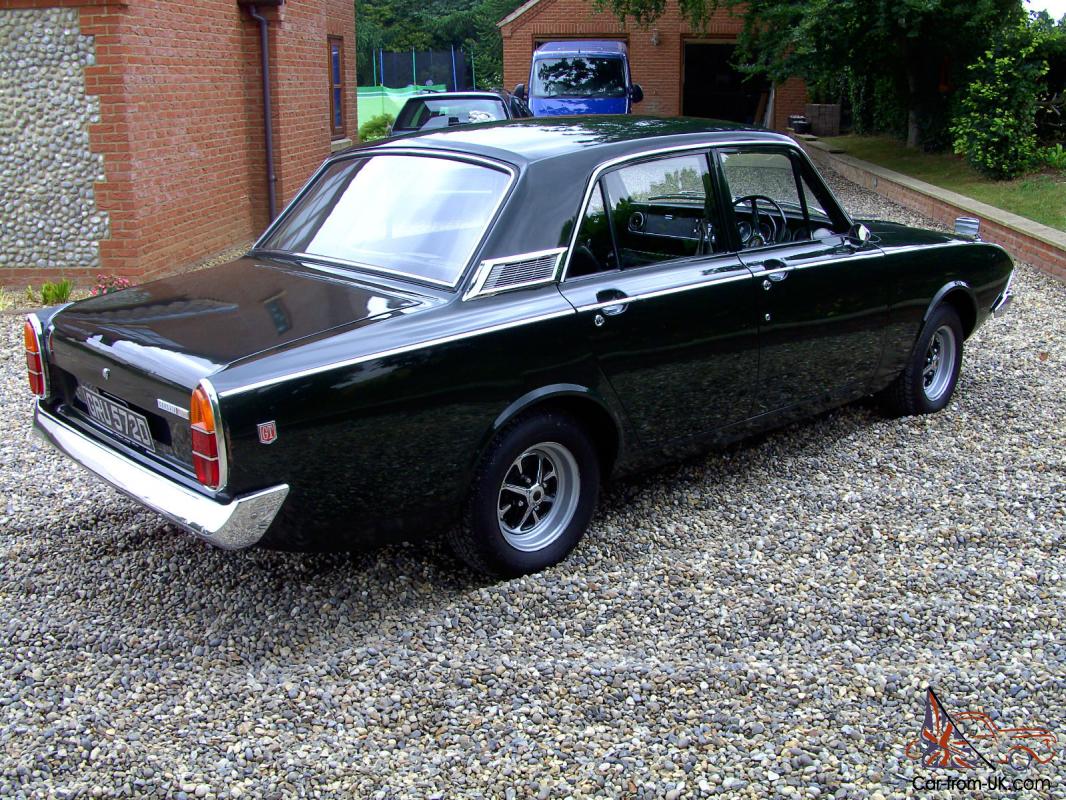
Ford Escort 1st Series - day-to-day and in competition
By Isabel Pimentel - October 29, 2020

This model was the natural successor to the successful Ford Anglia, a model we have already talked about here on autoblog.pt.
The automotive giant has always had a goal for Escort, that is, the European market as its main commercial target. Its production started in the city of
Halewood in England in 1967, on that assembly line the first Escort to leave that year were all right-hand drive, only later in September 1968 did Ford start production of the left-hand drive models in a factory located in Genk .
There were some differences between the models produced for the United Kingdom and the rest of Europe, which stood out for the front suspension with other settings, as well as differences in the steering, the braking system, and other rims, all of this in the versions produced in the factory in Genk.
Later in 1970 the continental production of Escort moved luggage to another factory in West Germany in the city of Saarlouis. In addition to these countries, Escort has also been produced across borders in countries as diverse as New Zealand and Australia.

Escort's success was enormous in the overwhelming majority of European countries, but in England the success was really overwhelming, becoming the best-selling car model of the sixties.
In June 1974, when the Escort was 6 years old since it was first marketed, the American brand announced to the world that it had produced 2 million of the model, a milestone that Ford had never achieved outside the United States. of America. About 60% of these cars were produced in the United Kingdom.
Ford_Escort_MkI_1100_1972
The rest were produced in West Germany at a slower rate of 150,000 units per year, and where production dropped to 78,604 last year (1974)
the model was produced.
The Ford Escort was distinguished by rear-wheel drive, a 4-speed manual gearbox (optionally, in some markets it could be equipped with a 3-speed automatic gearbox), a front suspension with a MacPherson frame and a simple spring-mounted rear axle leaf (popularly known as wagon springs).
In addition, the Escort was the first model of the brand to use a conventional steering system (with pinion and rack) as we still find in many modern cars.
Ford Escort Mexico MkI
In terms of design, the Escort had a modern aesthetic, and its line was inspired by the traditional Coca-Cola bottle, with its side line using the same shape as the famous container.
In addition, the model had a front grille that distinguished it from other cars, giving it a distinct and contemporary look for the time.
The Escort was initially marketed only in the two-door body, with the name (version) of De Luxe and was distinguished by the round headlights and the interior rubber carpet.
The Super version had rectangular headlights, conventional fabric carpet, a lighter and an engine temperature gauge.

In March 1968 the two-door van was introduced in the range, which contained the peculiarity of folding the rear seat, allowing a larger loading area.
The drive unit of this version was the same as that which existed in the two-door Escort, but the clutch was larger (190 mm in diameter), the rear springs were thicker, as well as the braking system (drums) was substantially larger and more powerful. in order to better control the extra weight it could carry compared to the conventional model.
In the following month, in April 1968 the version of the van with side panels instead of glass was introduced in the range, and the following year (1969) the 4-door version first appeared.
Looking at the engine chapter, the Kent Crossflow engine was the main unit of the model, both in the 1.1-liter configuration and in the 1.3-liter version. There was a 940 cc drive unit for some export markets, but very few were sold when compared to the units described above.
One of the most desired engines was the 1300 GT version, that is, a “spicy” version of the 1.3-liter Kent unit, which had a Weber carburetor. In addition, this version received an improved suspension to keep up with the increased power and performance of this unit.
Other differences in relation to the conventional model included extra instrumentation inside, such as the rev counter, a battery charge indicator and another with the oil pressure level.
This upgrade version of the 1.3 was also available on the Escort Sport, the latter had wider wings at the front, but in terms of interior equipment it was i

This Jaguar MK2 with a 24-cylinder, 6-cylinder engine is a car for the true gentleman.
If you sit inside covered with red leather and wooden pieces, you will find yourself in the 60s.
automatic gearbox and smooth engine ensure you can drive beautiful and comfortable routes.
MERCEDES-BENZ 230 S (W111) - STRONG AND QUALITY FOR ALL FAMILY
By Isabel Pimentel - October 23, 2020
 Serial production of the 4-door sedan began in August 1959, which debuted at the Frankfurt Motor Show in the fall. Initially, the series consisted of 220b, 220Sb and 220SEb. These replaced the (W105) 219, (W180) 220S and (W128) 220SE Ponton sedans, respectively. The 220b was a basic version, with little chrome finish, simple hubcaps and basic interior finish that had no pockets on the doors. Prices were DM16,750, 18,500 and 20,500, with an approximate sales ratio of 1: 2: 1.
All modes shared the M127 2195 cc M127 engine transported from the previous generation, producing 95 hp (71 kW) at 4800 rpm and capable of accelerating the heavy car to 160 km / h (155 if equipped with optional automatic gearbox). The 220Sb featured dual carburetors and produced 110 hp (82 kW) at 5000 rpm, increasing the top speed to 165 km / h (103 mph) (160 km / h) (160 km / h (99 mph)) and improving from 0 at 100 km / h (62 mph) acceleration to 15 seconds (16 in the 220b). The top-of-the-range 220SEb featured Bosch fuel injection producing 120 hp (89 kW) at 4800 rpm, with a top speed of 172 km / h (107 mph) (168 km / h (168 mph) for cars) and a range of 0 to 100 km / h (62 mph), time of 14 seconds.

Mercedes-Benz 220Sb
In 1961, the W111 chassis and body were shared with the even more basic 4-cylinder W110 and a luxurious W112 version built on the W111 chassis with its body and the 300-liter 3-cylinder M189 large block 6 series engine, many standard power features and a high level of internal and external finish. The body of the W110 featured a shorter hood compared to the W111.
Mercedes-Benz 220Sb
In May 1965, the 220Sb and 220SEb were replaced by the new 230S. It was visually identical to the 220S, [citation needed] with a 2306 cm3 M180 engine modernized with twin Zenith carburetors producing 120 hp (89 kW) at 5400 rpm. The maximum speed is 176 km / h (109 mph) (174 km / h (108 mph) in the car), the acceleration from 0-100 km / h (62 mph) is 13 seconds (15 with automatic transmission). As a successor to the 220b, Mercedes-Benz also introduced the 230, with the 2306 cm3 engine installed in the W110 series car. A total of 41,107 230S models were built until January 1968, when the last of the 4-door arrangements left the production line.
During its ten years between 1959 and 1968, 337,803 W111s were built.

Coupé and cabriolet
Cocktails almost disappeared in two-door versions
The design of a replacement for the two-door Pontons began in 1957. Since most of the chassis and transmission system were to be unified with the sedan, the scope was focused on the external style. Mercedes chose the work of engineer Paul Bracq, who had a more square and subtle rear treatment, more evocative of the subsequent square style of the subsequent W108 / W109 than the sharp fins of the sedan.

Production began in the late 1960s, with the coupe debuting on the 75th anniversary of the opening of the Mercedes-Benz Museum in Stuttgart, in February next year. The convertible followed at the Frankfurt Motor Show a few months later. Almost identical to the coupe, the roof with folding hood in a recess behind the rear seat and covered by a well-fitting leather "boot" in the same color as the seats. Unlike the previous generation of the two-door ponton series, the 220SE designation was used for both the coupe and the convertible; both received the same version of the 2195 cc M127 engine. Prices in 1962 were 32,500 for the coupe and 36,000 NLG for the cabriolet. Options included a sliding sunroof for the coupe, automatic transmission, power steering and individual rear seats.


The 3500 GT was intended to do just that. Using the company's proven inline six-cylinder engine, which now had 3.5 liters of displacement, the car was delivered when it was needed most and proved to be the success Maserati was looking for. Nearly 2,000 copies were produced over eight years, a huge number for a company previously known for its low-production, hand-built sports cars.

During 1957 and 1958, Frua E Touring individually shortened at least three of the first 3500 GT Spyders, but Maserati was not won over by any coachbuilder project and finally decided for Vignale to build its open cars. in 1959. Giovanni Michelotti was specifically responsible for the design of the 3500 Spyder Vignale which was completely different in detail from the 3500 Coupe produced by Carrozzeria Touring since 1957. Vignale is believed to have produced at least three prototypes (with differences in details) before use regular. spyder production, and the car officially debuted at the Turin Motor Show in 1959. In six years, 243 Vignale Spyders were produced.

Lotus Cortina is the term commonly used for the Ford Cortina Lotus, a high-performance sports sedan, which was produced in the United Kingdom from 1963 to 1970 by Ford in collaboration with Lotus Cars. The original version, based on the Ford Cortina Mark 1, was promoted by Ford as "Consul Cortina developed by Lotus", with "Consul" later being removed from the name. The Mark 2 was based on the Ford Cortina Mark 2 and was marketed by Ford as "Cortina Lotus".
3,306 Mark I and 4,093 Mark 2 Lotus Curtains were produced.
The history of the Lotus Curtain began in 1961. Colin Chapman wanted to build his own engines for Lotus, mainly because the Coventry Climax unit was so expensive. Colin Chapman's chance came when he hired Harry Mundy (a close friend and engine designer for Coventry Climax and technical editor for Autocar) to design a two-camera version of the Ford Kent engine. Most of the engine development was done in the lower end of 997cc and 1,340cc, but in 1962 Ford launched the engine with five cylinders of 1,498 cc and work centered on it. Keworth Duckworth of Cosworth played an important role in tuning the engine. The engine's first appearance was in 1962 at the Nürburgring in a Lotus 23 driven by Jim Clark. Almost as soon as the engine appeared in production cars (Lotus Elan), it was replaced by a larger capacity unit (82.55 mm to give 1.557 cc). This was to bring the car closer to the 1.6 liter capacity class in motorsport.
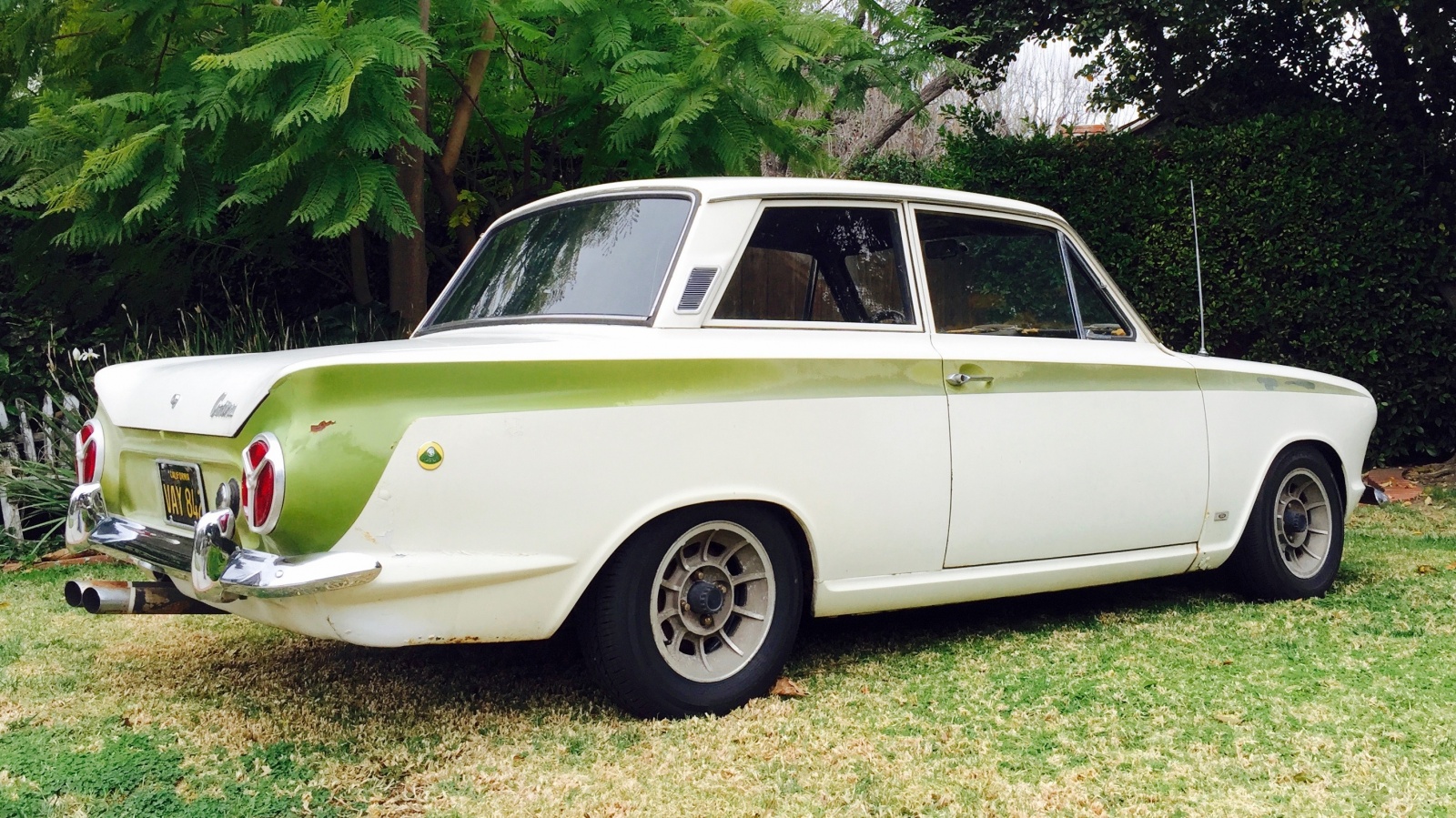
While the engine was being developed, Walter Hayes (Ford) asked Colin Chapman if he would fit the engine in 1,000 Ford sedans for Group 2 homologation. Chapman accepted quickly, although he must have been very busy at the Cheshunt factory, with Elan about to be launched. The Type 28 or Lotus Cortina or Lotus Cortina (as Ford liked to call it) was properly launched. Ford supplied the 2-door Cortina bodies and handled all the marketing and selling of the cars, while Lotus made all the mechanical and cosmetic changes. The main changes involved the installation of the 1,557 cc (105 bhp (78 kW; 106 hp)) engine, along with the same narrow-proportioned gearbox from Elan. The rear suspension has been drastically changed and alloy panels have been used for doors, hood and boot. Light covers were fitted to the gearbox and differential. All Lotus factory cars were painted white with a green stripe (although Ford built some to compete in red, and a customer had a dark blue stripe due to being superstitious about green). The cars also received bumpers in the front room and round Lotus emblems were mounted on the rear wings and on the right side of the radiator grille.

The internal modifications were limited to a central console designed to accommodate the new position of the gearshift, different seats and the rear instrument panel, with tachometer, speedometer, oil pressure, water temperature and fuel level gauges. A wooden rim wheel was attached.
The suspension changes on the car were quite extensive; the car received shorter arms at the front, forged track control arms and 5.5J steel wheel rims by 13. The rear was even more radical with vertical coil spring / dampers replacing leaf springs and two drag arms with an A-shaped bracket (which connected to the differential housing and brackets close to the pivots of the drag arm) separating the axle location. To support this configuration, more keys were placed behind the rear seat and rear wheel to the chassis in the boot. The rigidity supports meant that the spare wheel had to be moved from the standard curtain wheel well and bolted to the left side of the boot floor. The battery was also relocated for the boot, behind the right wheelarch. Both changes made major improvements in overall weight distribution. Another improvement that the Cortina Lotus gained was the new braking system (front discs 9.5 in. (240 mm)), built by the braking specialist Girling. This system was also equipped for Cortina GTs, but without a servo, which was mounted in the Cortina Lotus engine compartment.

The engines were initially built by J. A Prestwich of Tottenham and Villiers of Wolverhampton. In 1966, Lotus moved to Hethel, Norwich, where they had their own engine building facilities. The Lotus Curtain used an 8.0 inch (200 mm) diaphragm spring clutch, while Ford mounted helical spring clutches for the rest of the line. The rest of the gearbox was identical to Lotus Elan. This led to some problems because, although the ultra-contracted gear ratios were perfect for the race track or the open road, the clutch suffered a lot from traffic. The proportions were later changed.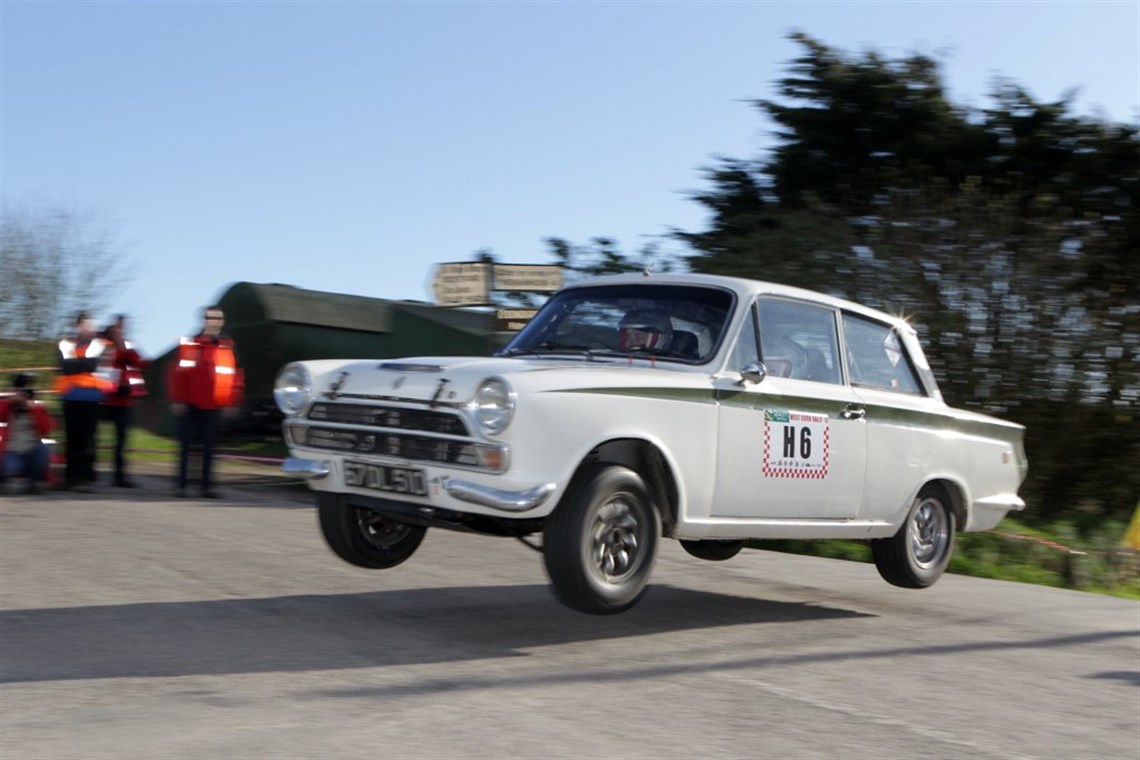
The first cars were very popular and won some acclaim; One magazine described the car as a top version of a Lotus 7. It was' The car 'for many enthusiasts who previously had to settle for a Cor tina GT or a Mini-Cooper and also greatly amazed the public that was used for' cars. overweight sports cars like the Austin Healey 3000.
Mercedes-Benz 770k - In its time it was a true luxury
By Isabel Pimentel - October 21, 2020

Mercedes Benz 770 (W07) on display at the 1931 Berlin Motor Show
The 770 was introduced in 1930 as the successor to the Mercedes-Benz Typ 630, with the internal code W07. [1] These high-priced cars were used primarily by governments as state vehicles.
Reich President Paul von Hindenburg, Emperor Hirohito and Pope Pius XI were among the customers, and Adolf Hitler used a 770 from 1931. 117 cars in the W07 series were built until 1938.

The W07 version of the 770 was powered by an in-line 7.655 cc (467.1 cu in) in-line engine with aluminum camshafts and pistons.
This engine produced 150 hp (112 kW) at 2800 rpm without overload.
An optional Roots supercharger, which was engaged at full throttle, would increase the output to 200 hp (149 kW) at 2800 rpm, which could propel the car at 160 km / h (99 mph).
The transmission had four forward proportions, of which the third was direct and the fourth was an overtaking.
The W07 had a contemporary chassis box suspended by semi-elliptical springs on front and rear axles.
The dimensions would vary with the body, but the chassis had a wheelbase of 3,750 mm (147.6 in.) And a front track equal to the rear track of 1,500 mm (59.1 in.).

Series II - W150 (1938–1943)
Hitler in a W150 convertible in Bad Godesberg, 1938
The 770 was substantially overhauled in 1938, resulting in the new internal designation of the W150.
The new chassis was made with tubes of oval section and was suspended from springs throughout, with independent suspension at the front and a Dion axle at the rear. [2] Hydraulic brakes have been fitted, compared to the servo-assisted mechanical brakes of the previous series.
The engine had the same basic architecture as the W07, but was tuned to produce 155 hp (116 kW) at 3000 rpm without overload and 230 hp (172 kW) at 3200 rpm with. [7] The transmission now had five links ahead with a fourth straight gear and a fifth overtaking. [2] [7] The top speed was about 170 km / h (106 mph). A double 400 hp (298 kW) model was available and installed in five vehicles, allowing a top speed of around 190 km / h (118 mph).
